

The potential saving of 23 billion litres per year is equivalent to the average tap water consumption of around 750,000 people in Flanders. By reusing treated industrial wastewater as process water, chemical companies reduce their demand for drinking water in production. That in turn reduces the pressure on available drinking water supplies, particularly during prolonged periods of drought.
The Flemish chemical industry has already significantly reduced its consumption of high-quality water in recent years. Between 2014 and 2024, consumption of drinking water and groundwater fell by almost a quarter.
Wastewater is turned back into process water
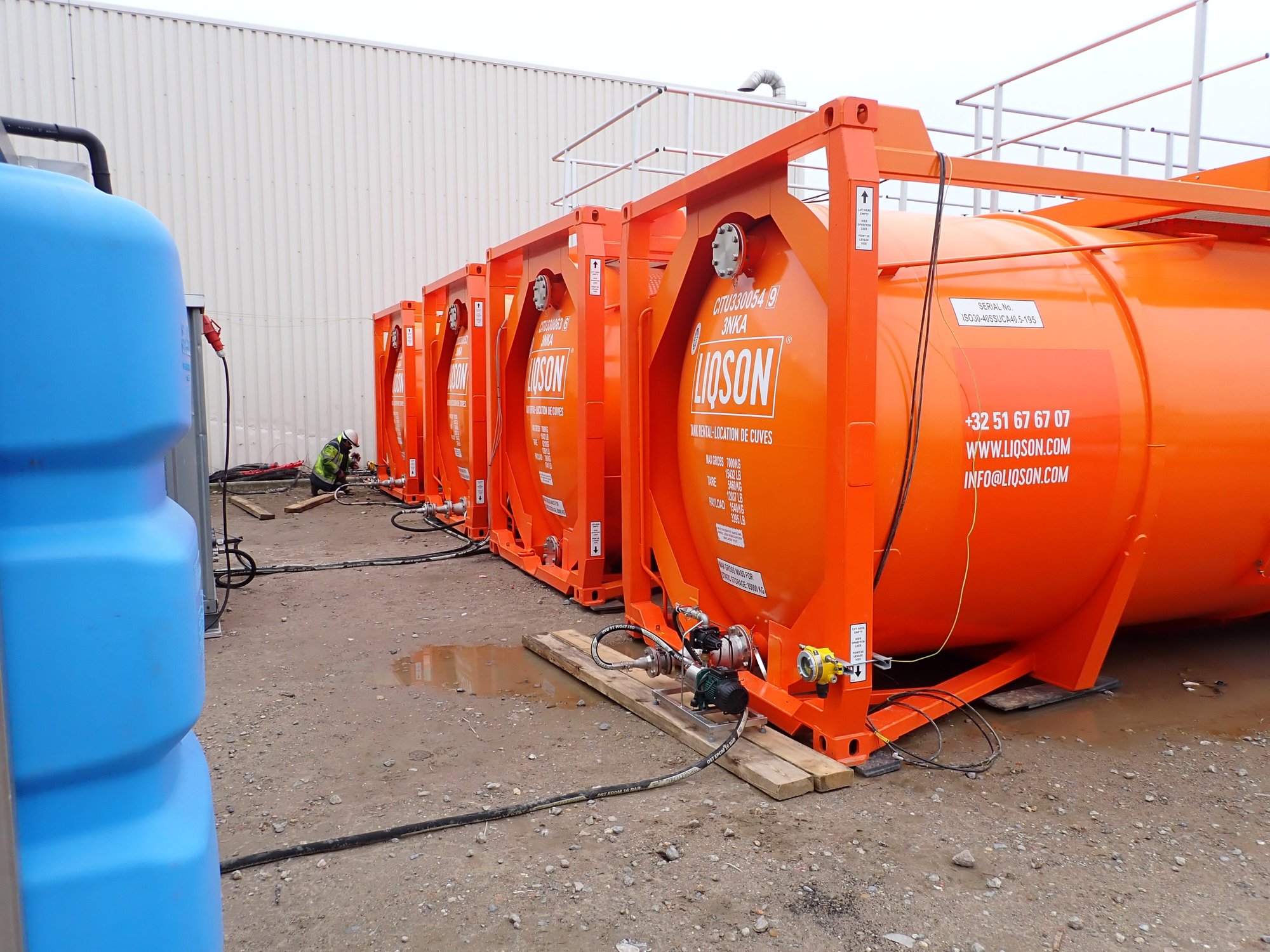
CHERISH2O is building on this evolution and has investigated how water flows from different companies can be collectively treated and reused. A demo set-up at the TotalEnergies site tested wastewater streams from five chemical companies in two clusters at Port of Antwerp. The trials confirm that treated industrial wastewater can be upgraded to a quality standard suitable for reuse in industrial processes.
Jo Brouns, Flemish Minister for the Environment and Agriculture: “We must give every opportunity to projects that can save billions of litres of drinking water.” CHERISH₂O demonstrates that large-scale water reuse is technically feasible. We now need to look at the next step towards more tangible investments, with a workable regulatory framework and clear European rules. Water reuse and investment must go hand in hand with our water quality objectives in that regard.
”
Johan Klaps, Chair of the Board of Directors of Port of Antwerp-Bruges and Antwerp’s Port Alderman: “CHERISH2O proves that collaboration between companies, the government and knowledge partners leads to solutions with a social impact.” By creating the right conditions, we can actually realise innovative solutions for water security, climate adaptation and industrial anchoring, and this project can become a European model for circular water use.
”
Technically feasible, but regulations are the stumbling block
Now that the technical feasibility has been demonstrated, the main challenges are economic feasibility, regulation and licensing. There is a residual concentrate stream when reusable water is produced. Additional processing of this water entails extra costs, meaning that a collective reuse system currently struggles to compete with drinking water.
The current implementation of the European Water Framework Directive is another challenge. By reusing water, less wastewater is discharged. That means lower dilution and higher concentration measurements at certain locations, even though there is no additional pollution. A project that saves billions of litres of drinking water and recycles water in a circular approach faces significant difficulties in getting licensed, or may not even get a licence at all, due to the way in which local impacts are currently assessed.
The project partners are therefore calling on the authorities to not only look at local concentrations, but also the overall environmental benefits, water quality and savings in drinking water. The aim is not to relax environmental objectives, but to create a supporting policy framework that makes circular water use possible. The project partners are calling on Minister Brouns to raise the issue at European level and provide policy support in Flanders, so that industrial water projects with significant potential for saving drinking water can actually be implemented.
Barbara Veranneman, Managing Director of essenscia: “In the chemical industry, every drop of water counts. Our companies have already significantly reduced their drinking water and groundwater use in recent years, and CHERISH2O shows that we can go even further. The project is a textbook example of how our industry can contribute to environmental and climate objectives. The technology works. Now the viable business case and the regulatory framework also need to follow, with a comprehensive assessment that takes into account the overall environmental benefits and drinking water savings. This is the only way a technically feasible project can also become a viable investment.
”
Bart Van den Driessche, Managing Director of Bayer: “Water is a crucial resource for our operations at Port of Antwerp and a scarce commodity that must be responsibly managed.” That is why CHERISH2O is so important: it demonstrates that, by working together, companies can save drinking water while at the same time boosting their industrial activity in Flanders. The technology is proven. We now need a regulatory framework that will make it possible to go from pilot project to investment.
”
From pilot project to investment?
CHERISH2O is therefore at a tipping point. The technology has been researched and validated. The fact that companies are willing to work together offers excellent potential for saving drinking water. But technical feasibility does not yet mean the project is investable. To make the transition from pilot project to investment, a policy framework that offers adequate investment certainty and an economically viable model for all parties involved are crucial.
In the project partners' view, if these conditions are met, CHERISH2O has the potential to become one of Europe’s largest circular water projects
About CHERISH2O
CHERISH2O was launched in 2024 to investigate how chemical companies at Port of Antwerp can jointly upgrade and reuse their treated industrial wastewater. The project builds on the Flemish Blue Deal and on previous research into water reuse in the Antwerp chemical cluster.
The project brings together VITO, essenscia, Antea Group, the Flanders Environment Agency (VMM) and Port of Antwerp-Bruges, together with 12 chemical companies: Ashland, BASF, Bayer, Borouge International, Envalior, Evonik, ExxonMobil, INEOS, Lanxess, Monument Chemical, TotalEnergies and 3M. The project was supported by funds from the Flemish Blue Deal, in collaboration with the participating partners and companies.
.